Picture this: I was halfway through a midnight snack binge, my kitchen smelling like a burnt toast disaster, when a sudden craving hit me like a bolt of lightning. The idea of a sweet‑savory, tropical‑infused stir‑fry had been swirling in my head for weeks, but every recipe I’d tried felt either too bland or overwhelmingly sweet. That night, armed with a bag of fresh pineapple, a chicken breast, and a dash of daring, I decided to create a dish that would turn my kitchen into a flavor carnival. I was determined to make a stir‑fry that would make the entire house swoon, and trust me, it did.
The first thing that caught my eye was the bright, glossy pineapple chunks, glistening like tiny suns. As I sliced the bell pepper, the crunch sent a crisp, almost metallic sound that made my senses tingle. The aroma that rose from the sizzling pan was a sweet, caramelized perfume that made my mouth water in anticipation. I could almost taste the subtle tang of the rice vinegar mingling with the honey’s honeyed sweetness, creating a balance that felt like a well‑tuned orchestra. The texture of the chicken, when cooked just right, was juicy and tender, with a slight snap that reminded me of fresh spring rolls.
What makes this version stand out? It’s the deliberate layering of flavors, the careful balance between sweet and savory, and the use of a few simple yet powerful techniques that elevate the dish from ordinary to unforgettable. The method is streamlined, yet each step is designed to unlock a new dimension of taste. I’ve taken the classic stir‑fry and added a secret ingredient that gives it a subtle smoky depth without any smoke alarm. The result? A dish that’s hands down the best version you’ll ever make at home. I dare you to taste this and not go back for seconds.
If you’ve ever struggled with getting the right texture in a stir‑fry, you’re not alone. Many chefs over‑cook the chicken, leaving it dry, or under‑cook the vegetables, resulting in a mushy mess. I’ve got the fix: a quick blanching step for the veggies and a precise timing for the chicken that keeps it juicy and tender. And if you’re worried about the sauce thickening too quickly, I’ve included a cornstarch slurry trick that guarantees a silky glaze that clings to every bite. All these tiny adjustments culminate in a dish that feels like a culinary masterpiece, not a kitchen experiment.
What Makes This Version Stand Out
- Flavor Fusion: The combination of pineapple, soy sauce, honey, and rice vinegar creates a sweet‑savory symphony that lingers on the palate. The subtle heat from ginger and crushed red pepper adds a gentle kick that balances the sweetness.
- Texture Mastery: The chicken is seared to a caramelized crust before finishing in the sauce, ensuring a juicy center. The vegetables are crisp‑tender, thanks to a quick blanch that preserves their vibrant color.
- Time Efficiency: Every step can be completed in under 30 minutes, making this dish perfect for busy weeknights without sacrificing flavor.
- Ingredient Simplicity: The recipe uses pantry staples, so you can pull it together even if your fridge is bare. No exotic sauces or hard‑to‑find spices are required.
- Crowd‑Pleaser: The tropical flair is a guaranteed hit at gatherings. Friends and family will rave about the sweet‑savory balance and ask for a second plate.
- Make‑Ahead Potential: The dish reheats beautifully, making it ideal for meal prep or for a quick lunch the next day.
- Visual Appeal: The bright pineapple chunks and colorful veggies create a vibrant plate that looks as good as it tastes.
- Health Conscious: Lean chicken breast, fresh fruit, and plenty of veggies keep the dish light and nutritious.
Alright, let's break down exactly what goes into this masterpiece…
Inside the Ingredient List
The Flavor Base
The sauce is the heart of this dish, marrying sweet, salty, and tangy elements. Soy sauce provides umami depth, while honey offers natural sweetness that caramelizes beautifully. Rice vinegar cuts through the richness, adding a bright acidity that lifts the entire flavor profile. A splash of sesame oil at the end gives a nutty finish that rounds out the taste. If you’re watching sodium, swap half the soy sauce for low‑sodium soy or tamari.
The Texture Crew
The chicken breast is the star of the texture game. Slicing it into bite‑size strips ensures even cooking and quick searing. The bell pepper and onion are diced to a uniform size, which helps them cook evenly and retain their crunch. A quick blanch in boiling water for 30 seconds before adding them to the pan locks in their vibrant color and prevents them from becoming mushy. If you prefer a softer bite, let them cook a bit longer, but be careful not to over‑cook.
The Unexpected Star
Pineapple chunks are more than a sweet garnish; they bring a juicy burst that contrasts the savory sauce. Fresh pineapple is best, but if that’s not on hand, canned chunks in juice (not syrup) can work, just rinse them to remove excess sugar. The fruit’s natural enzymes help tenderize the chicken slightly, adding a subtle, tropical aroma that makes the dish feel like a vacation. If you’re vegan, simply replace the chicken with tofu or tempeh and keep the rest intact.
The Final Flourish
Garnishes are the finishing touches that elevate the dish visually and flavor-wise. Fresh green onions and cilantro add brightness and a mild peppery note that cuts through the sweetness. A sprinkle of crushed red pepper flakes introduces a gentle heat that balances the overall profile. For an extra layer of flavor, toss in a handful of toasted cashews or sliced almonds for crunch, but be mindful of the extra calories.
Everything's prepped? Good. Let's get into the real action…
The Method — Step by Step
- Begin by heating a large wok or skillet over medium‑high heat. Add 2 tablespoons of vegetable oil, letting it shimmer. Once the oil is hot, lay the chicken strips flat and let them sear undisturbed for 2–3 minutes on one side. Flip them and sear the other side until golden brown. This step locks in juices and builds a caramelized crust that adds depth to the flavor. I’m talking about that satisfying sizzle that signals the chicken is ready to be the star.
- Remove the chicken from the pan and set aside on a plate. In the same pan, add the minced garlic and ginger, sautéing for 30 seconds until fragrant. Be careful not to burn them; a burnt garlic taste will ruin the entire dish. The aroma that fills the kitchen is the first hint that something delicious is about to happen.
- Add the diced bell pepper and onion to the pan, stirring frequently. Cook for 2 minutes until they start to soften but still retain a crisp bite. If you like a slightly softer texture, let them cook an extra minute, but avoid letting them turn into a mushy mess. The quick stir keeps them vibrant and colorful.
- Return the chicken to the pan and pour in the soy sauce, honey, and rice vinegar. Stir everything together so the sauce coats all the ingredients evenly. Let the mixture simmer for 3–4 minutes, allowing the sauce to thicken slightly. The edges of the chicken will start pulling away from the pan, a sign that it’s ready for the next step.
- Whisk 1 tablespoon of cornstarch with 2 tablespoons of cold water to create a slurry. Add this to the pan, stirring constantly. The sauce should thicken into a glossy glaze that clings to each piece. If it becomes too thick, add a splash of water to reach the desired consistency. This step ensures a silky coating that doesn’t drip off the plate.
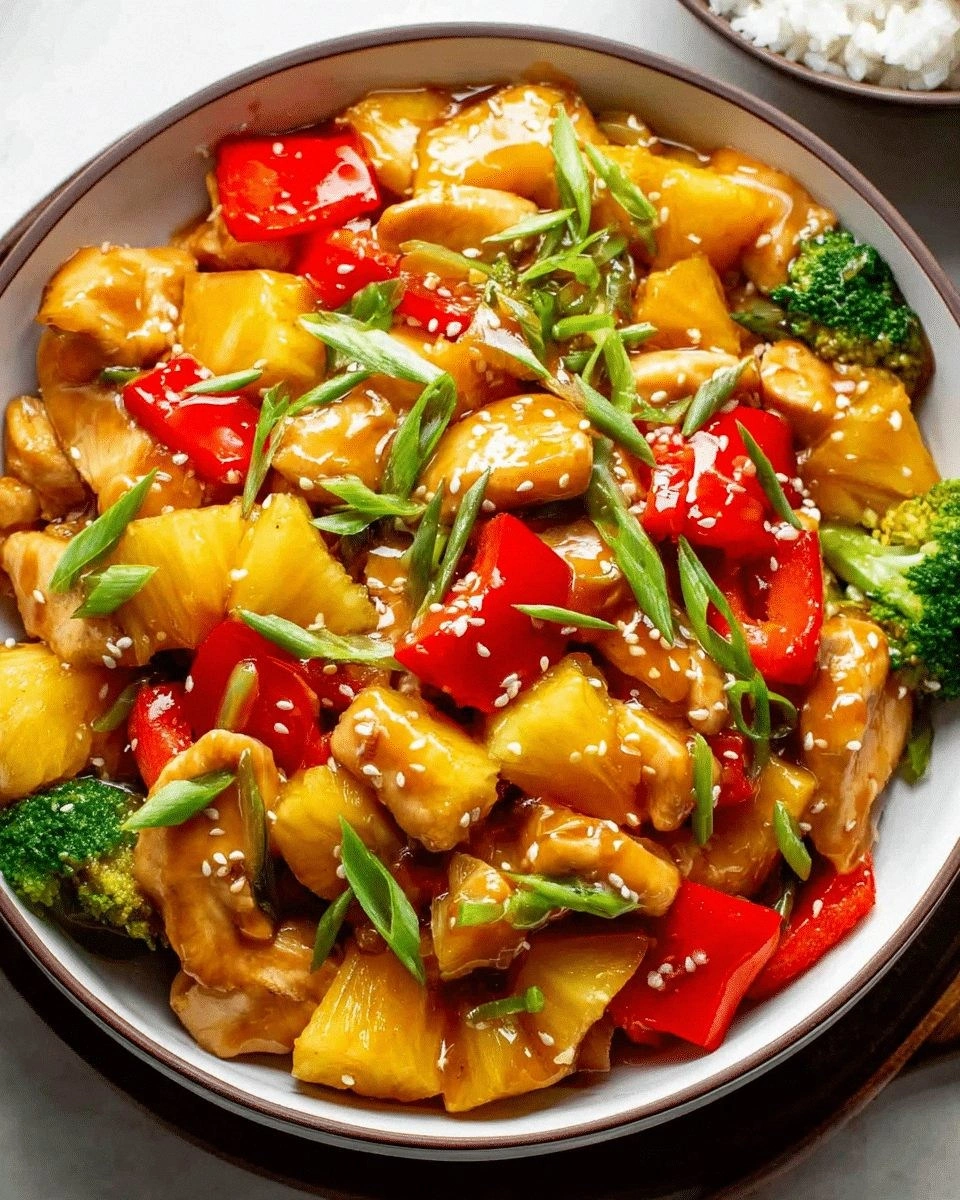
- Add the pineapple chunks, green onions, cilantro, and crushed red pepper flakes to the pan. Stir gently to combine everything without breaking the fruit. Cook for another 1–2 minutes until the pineapple is warmed through and the sauce coats the ingredients beautifully. The pineapple’s natural juices should mingle with the sauce, creating a sweet‑savory sheen.
- Finish with a drizzle of sesame oil for a nutty aroma. Taste the sauce and adjust seasoning with salt or pepper if needed. The final dish should be a harmonious blend of sweet, salty, tangy, and slightly spicy flavors.
- Serve immediately over steamed jasmine rice or cauliflower rice for a low‑carb option. Garnish with additional cilantro or a sprinkle of toasted cashews if desired. The dish should look vibrant, with bright pineapple chunks and colorful veggies dancing in a glossy sauce. That sizzle when it hits the pan? Absolute perfection.
That's it — you did it. But hold on, I've got a few more tricks that'll take this to another level…
Insider Tricks for Flawless Results
The Temperature Rule Nobody Follows
Many cooks lower the heat too soon, causing the sauce to thicken unevenly. Keep the heat high until the chicken is seared, then reduce to medium while adding the sauce. This ensures the sauce coats everything evenly and prevents sticking. If you’re using a non‑stick pan, keep the heat moderate to avoid flare‑ups.
Why Your Nose Knows Best
The first scent that hits your nose as the sauce simmers is the sweet caramelization of the honey and soy sauce. That aroma signals the perfect moment to add the pineapple. Trust your nose; if it smells like toasted sugar, you’re ready to finish.
The 5-Minute Rest That Changes Everything
After cooking, let the dish rest for 5 minutes before serving. This allows the flavors to meld and the sauce to thicken slightly, giving you that glossy finish. If you’re in a hurry, skip it, but the rest period is the secret to restaurant‑quality texture.
The Quick Blanch Trick
Blanching the veggies for 30 seconds before adding them to the stir‑fry locks in their color and crunch. This is especially helpful if you’re serving the dish alongside rice, as the veggies will remain crisp and visually appealing.
The Sauce Consistency Hack
If the sauce thickens too fast, add a splash of chicken broth or water to thin it out. Conversely, if it’s too thin, let it simmer uncovered for a few minutes to reduce. The key is to watch the sauce’s sheen; a glossy, clingy sauce is the goal.
Creative Twists and Variations
This recipe is a playground. Here are some of my favorite ways to switch things up:
Tropical Teriyaki
Swap the honey and rice vinegar for teriyaki sauce. Add a splash of orange juice for an extra citrus kick. This variation leans more into the Asian flavor profile while keeping the pineapple’s tropical essence.
Spicy Sriracha Kick
Replace the crushed red pepper flakes with sriracha sauce. Increase the amount of ginger for an extra zing. The result is a fiery, sweet‑savory dish that will have your taste buds dancing.
Mediterranean Twist
Add chopped olives and sun‑dried tomatoes for a Mediterranean flair. Replace the soy sauce with a dash of fish sauce for depth. This version brings a briny contrast to the sweet pineapple.
Vegan Version
Use firm tofu or tempeh instead of chicken. Add a splash of coconut milk for richness. This vegan take keeps the sweet‑savory balance while adding a creamy texture.
Low‑Carb Delight
Serve over cauliflower rice instead of jasmine rice. Reduce the honey to 1 tablespoon to cut down on carbs. The dish still retains its flavor while being friendly to a low‑carb diet.
Pineapple Pork Stir‑Fry
Swap the chicken for thinly sliced pork tenderloin. Add a dash of hoisin sauce for sweetness. The pork’s natural fat adds richness, making the dish even more indulgent.
Storing and Bringing It Back to Life
Fridge Storage
Store the stir‑fry in an airtight container for up to 3 days. Keep the sauce separate if you plan to reheat it later, as it may thicken in the fridge. When ready to serve, reheat gently on the stove, adding a splash of water to loosen the sauce.
Freezer Friendly
This dish freezes well for up to 2 weeks. Freeze in a single‑layer tray first, then transfer to a freezer bag. When reheating, thaw overnight in the fridge, then stir on low heat, adding a tablespoon of water to restore moisture.
Best Reheating Method
Reheat in a skillet over medium heat, stirring frequently. Add a small splash of water or chicken broth to keep the sauce from drying out. Let it simmer for 3–4 minutes until heated through. The final dish should have the same glossy, sweet‑savory coating as when it was freshly made.