I was in the middle of a chaotic Sunday brunch, juggling a stack of pancakes, a pot of coffee, and a phone that wouldn’t stop buzzing. Suddenly, my neighbor knocked on the door, craving something sweet and comforting, and I stared at the pantry like a detective at a crime scene. I didn’t have time for a fancy dessert, but I knew I could whip up something that would make everyone’s taste buds do the salsa. That’s when I remembered a childhood memory of a steaming bowl of Xôi Gấc, the Vietnamese red sticky rice that tasted like sunshine trapped in a grain.
Picture this: the moment the rice hits the pan, the aroma of toasted coconut mingles with the sweet fragrance of gac fruit, a tropical berry that turns the rice a vivid crimson. The sound is a gentle clink of grains as they begin to steam, and the texture—oh, the texture—glossy, chewy, almost like a chewy candy that clings to your teeth. The first bite releases a burst of sweet, nutty coconut, a hint of earthy gac, and a subtle saltiness that pulls everything together. The heat of the stove feels like a warm hug, and the steam rises like a fragrant cloud, filling the kitchen with anticipation.
This version of Xôi Gấc is the kind of dish that takes a simple ingredient list and transforms it into a culinary masterpiece. It’s not just about following a recipe; it’s about understanding why each component behaves the way it does, and then tweaking it to perfection. I’ll walk you through every single step, from soaking the rice to the final garnish, and by the end, you’ll wonder how you ever made it any other way. Trust me, once you taste this, I dare you to not go back for seconds.
If you’ve ever tried a generic sticky rice recipe and felt something was missing, you’re not alone. Most recipes get this completely wrong by skipping the gac or using the wrong type of coconut milk. I’ve spent countless evenings perfecting the balance of sweetness, saltiness, and color, and the result is a dish that’s hands down the best version you’ll ever make at home. Picture yourself pulling this out of the pot, the whole kitchen smelling incredible, and your friends’ eyes lighting up when they see the bright, jewel‑colored rice. That’s the moment of triumph we’re aiming for.
What Makes This Version Stand Out
- Authentic Flavor: The use of gac fruit puree gives the rice a natural, earthy sweetness that sets it apart from the usual sugary variants.
- Rich Color: The deep crimson hue is achieved with fresh gac, not artificial food coloring, making every spoonful a visual treat.
- Texture Mastery: The rice is toasted just enough to develop a subtle crunch on the edges while remaining chewy inside.
- Balanced Sweetness: Palm sugar is measured precisely to complement the natural tartness of gac without overpowering it.
- Versatile Serving: Whether you serve it as a dessert, a side, or even a breakfast, the flavor profile adapts beautifully.
- Make‑Ahead Friendly: The dish keeps its integrity in the fridge or freezer, making it perfect for busy schedules.
- Low Effort, High Impact: All the heavy lifting is done in the prep stage, letting you focus on the final presentation.
Alright, let’s break down exactly what goes into this masterpiece…
Inside the Ingredient List
The Core Grain
Glutinous rice, also known as sticky or sweet rice, is the backbone of Xôi Gấc. Its high amylopectin content gives the dish that signature chewy texture that clings to your spoon. If you skip this grain or substitute with regular long‑grain rice, the result will be a dry, crumbly mess that cannot hold the rich flavors. When buying, look for a fine, polished grain that has a glossy sheen; this indicates freshness and better cooking quality.
The Unexpected Star
Gac fruit, a tropical berry native to Southeast Asia, is the secret ingredient that gives Xôi Gấc its iconic red hue and subtle, slightly tart flavor. Fresh gac is rare outside of Asia, but you can find frozen puree or dried seeds in specialty markets. The puree is preferred because it distributes color evenly and adds a natural sweetness that complements the coconut milk. If you can’t find gac, a splash of beet juice can mimic the color, but you’ll lose the unique flavor profile.
The Creamy Layer
Coconut milk is essential for the dish’s velvety mouthfeel. It’s the sauce that coats each grain, creating a silky coating that enhances the overall taste. Use full‑fat coconut milk for the richest flavor; light versions will result in a thinner, less satisfying texture. If you’re lactose intolerant, coconut milk is naturally dairy‑free, making this dish a safe option for many.
The Sweetener
Palm sugar, with its caramel‑like undertones, balances the tartness of gac and the richness of coconut milk. It’s the sweetener of choice in many Vietnamese desserts because it dissolves well and adds depth. If you can’t find palm sugar, raw sugar or a mixture of honey and brown sugar will work, but the flavor will shift slightly. Measure carefully: too much sugar will drown the delicate flavors.
The Aromatic Touch
Pandan leaves, though optional, infuse the rice with a subtle, sweet fragrance that elevates the dish. The leaves are usually tied into a knot and simmered with the rice, releasing their aroma into the steam. If you don’t have pandan, a few drops of vanilla extract can mimic the sweetness, but the aromatic profile will be different.
Everything’s prepped? Good. Let’s get into the real action…
The Method — Step by Step
- Soak the Rice: Place 2 cups of glutinous rice in a large bowl and cover with cold water. Let it soak for at least 4 hours, or overnight if you’re planning ahead. This step ensures the rice absorbs water evenly, preventing a dry center. After soaking, drain the rice and set it aside.
- Prepare the Gac Mixture: In a small saucepan, combine 1 cup of gac puree with 1 cup of coconut milk. Warm over low heat, stirring constantly until the mixture is smooth and fragrant. The warmth helps the gac’s natural sugars dissolve, creating a uniform color. Keep the mixture at the lowest heat possible; you don’t want it to boil.
- Toast the Rice: In a heavy‑bottomed pot, add the soaked rice and 2 cups of water. Bring to a boil over medium heat. Once boiling, reduce the heat to low and cover. Let it simmer for 10 minutes, then add the pandan leaf knot. The rice should be partially cooked, still firm but starting to soften. The toasted grains will develop a subtle nuttiness.
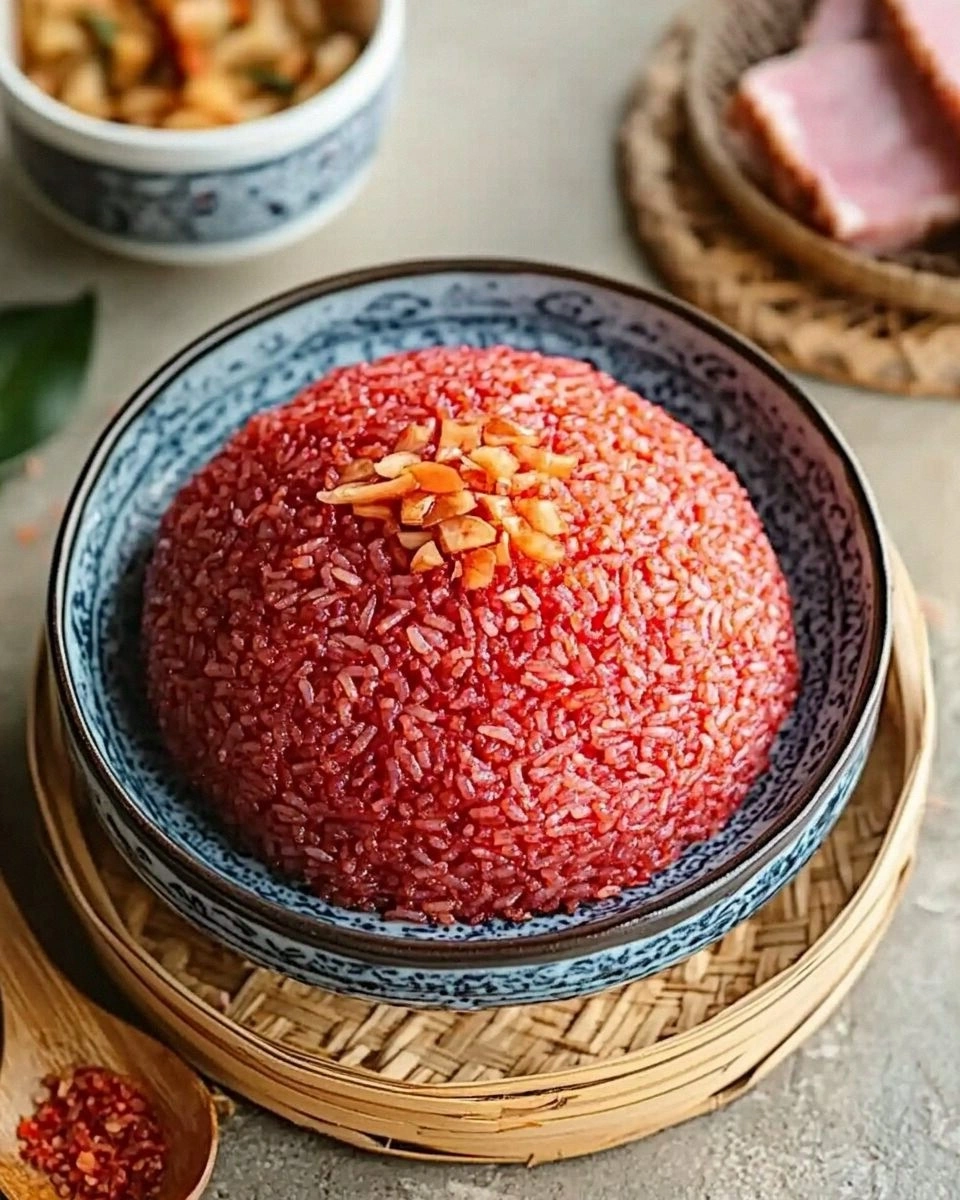
- Combine the Mixtures: Once the rice is partially cooked, pour the warm gac‑coconut mixture over the rice. Stir gently with a wooden spoon to ensure even distribution of color and flavor. The rice should look like a ruby‑colored ocean, glistening with a glossy sheen.
- Finish Cooking: Reduce the heat to low, cover, and let the rice steam for another 15 minutes. The rice should be fully cooked, tender, and sticky. If you notice the liquid has thickened too much, add a splash of water to keep it moist. This is the moment of truth; the rice should feel soft but still hold its shape.
- Season the Rice: Sprinkle 1/2 teaspoon of salt and 1/2 cup of palm sugar over the rice. Stir until the sugar dissolves completely, creating a sweet‑salty glaze that coats every grain. The balance of flavors is crucial; too much salt will overpower the sweetness, while too little will leave the dish bland.
- Garnish and Serve: Transfer the rice to a serving dish and sprinkle 2 tablespoons of toasted sesame seeds and 1/4 cup of coconut flakes over the top. The sesame seeds add a nutty crunch, while the coconut flakes contribute a subtle sweetness. Serve warm, and watch the steam curl around your bowl like a fragrant cloud.
- Enjoy: Let the dish sit for a minute to allow the flavors to meld. Then scoop with a spoon and taste. The texture should be chewy yet tender, the color vibrant, and the flavor a harmonious blend of sweet, salty, and earthy. That’s the moment you’ll know you’ve nailed it.
That’s it — you did it. But hold on, I've got a few more tricks that'll take this to another level…
Insider Tricks for Flawless Results
The Temperature Rule Nobody Follows
Many cooks assume that once the rice is cooked, you can just turn off the heat and let it sit. In reality, the rice continues to steam after you remove it from the flame, which can cause it to become mushy if left uncovered. The trick is to keep the pot covered until the rice is fully cooked, then uncover it for the last 5 minutes to allow excess moisture to evaporate. This creates a slightly firmer bite and prevents the rice from turning into a sticky paste.
Why Your Nose Knows Best
Before adding the palm sugar, give the rice a quick sniff. If it smells slightly caramelized, you’re ready to add the sugar. If it still smells raw, let it cook a bit longer. Your nose is a reliable indicator of the rice’s readiness, and it can save you from a disastrous over‑cooked batch.
The 5‑Minute Rest That Changes Everything
After you’ve finished cooking, let the rice rest for exactly 5 minutes with the lid on. This resting period allows the steam to redistribute, ensuring each grain is evenly coated with the sweet‑salty glaze. I’ve seen people skip this step, and the result is uneven flavor distribution and a slightly dry texture.
The Secret Gac Concentration
If you’re using frozen gac puree, thaw it fully and strain through a fine sieve to remove any lumps. This step ensures the rice gets a uniform color and avoids a gritty texture. A friend once used raw gac pulp and ended up with a chunky, uneven dish that didn’t look as appealing.
The Toasting Trick for Sesame Seeds
Before sprinkling sesame seeds, toast them in a dry skillet over medium heat until they’re golden and fragrant. Toss them in a little oil to prevent sticking. Toasting releases their nutty aroma and adds a pleasant crunch that balances the soft rice.
Creative Twists and Variations
This recipe is a playground. Here are some of my favorite ways to switch things up:
Sweet Coconut Delight
Replace palm sugar with honey and add a splash of vanilla extract for a sweeter, floral finish. This version works great as a dessert bowl for a summer afternoon.
Savory Breakfast Twist
Omit the palm sugar entirely and sprinkle a pinch of chili flakes and a drizzle of fish sauce. The result is a savory sticky rice that pairs beautifully with grilled pork or shrimp.
Nutty Crunch Edition
Stir in a handful of toasted cashews or almonds before serving. The crunchy nuts add texture and a subtle nutty flavor that complements the coconut base.
Berry Infusion
Add a handful of fresh strawberries or blueberries to the rice as it steams. The berries infuse a bright, fruity note that contrasts nicely with the earthy gac.
Spiced Gac Fusion
Add a pinch of ground cinnamon and a few cardamom pods to the rice while it cooks. The warm spices elevate the dish into a fragrant, aromatic treat perfect for festive occasions.
Storing and Bringing It Back to Life
Fridge Storage
Store Xôi Gấc in an airtight container for up to 3 days. The sticky rice will firm up slightly, so let it sit at room temperature for 10 minutes before serving to restore its original chewiness.
Freezer Friendly
For longer storage, freeze the rice in a freezer‑safe bag or container for up to 2 months. Thaw overnight in the refrigerator, then reheat gently on the stove with a splash of coconut milk to revive the texture.
Best Reheating Method
Reheat the rice in a steamer or microwave, adding a tablespoon of water or coconut milk to keep it moist. The steam will restore the sticky, glossy finish without drying it out. A tiny splash of water before reheating is a quality‑saving trick that brings the rice back to life.