Picture this: I’m standing in my kitchen, a half‑finished salmon fillet in hand, and the air smells like a burnt toast disaster. I was supposed to whip up a simple dinner, but the pan’s been a rogue, the oil hissed louder than a dragon, and the salmon emerged with a charred crust that made my eyes water. I swear I almost called it “sunk in the skillet” and tossed it into the trash. Then, a voice from my pantry—my trusty jar of fish sauce—whispered a secret: “You can turn that mistake into a Thai‑style masterpiece.”
When the first bite landed on my tongue, the flavors exploded like a fireworks show in a bowl. The smoky sear of the salmon met the bright zing of lime, the gentle sweetness of palm sugar, and a peppery kick from chili flakes that danced across my palate. The crunch of cucumber and the herbaceous burst from coriander and mint created a texture orchestra that sang in perfect harmony. I could hear the sizzle of the pan, feel the heat radiating from the skillet, smell the fresh herbs, taste the briny fish, and see the vibrant colors swirled together. It was a culinary revelation that made my kitchen feel like a secret Thai bistro.
What makes this version stand out isn’t just the flavors—it’s the way every element is elevated. The salmon is not just cooked; it’s seared to a caramelized finish that locks in moisture. The dressing is a balance of sweet, salty, sour, and spicy that coats the fish like velvet. The fresh herbs are chopped with precision to release their aromatics without turning the salad mushy. The result is a dish that feels indulgent yet light, complex yet approachable. I dare you to taste this and not go back for seconds.
There’s a twist you won’t expect: a subtle palm sugar infusion that balances the sharpness of the lime and the heat of the chili. And the best part? This recipe is hands down the best version you’ll ever make at home. Let me walk you through every single step — by the end, you’ll wonder how you ever made it any other way.
What Makes This Version Stand Out
- Seared Perfection: The salmon is pan‑seared to a golden crust that provides a satisfying crunch while keeping the inside buttery and moist. The high heat caramelizes the sugars on the surface, creating a flavor profile that is both savory and subtly sweet.
- Balancing Act: The dressing combines fish sauce, lime juice, and palm sugar in precise ratios, ensuring no single element overpowers the others. This harmony keeps the dish from feeling too salty or too acidic.
- Fresh Herb Explosion: A generous mix of coriander, mint, and spring onion delivers an herbaceous punch that cuts through the richness of the salmon. The herbs are chopped finely to release their oils without turning the salad soggy.
- Texture Contrast: Crisp cucumber ribbons, crunchy scallions, and the tender salmon create layers that satisfy both the eyes and the tongue. The salad feels light yet substantial.
- Make‑Ahead Friendly: The dressing can be prepared a few hours ahead, and the salmon can be pre‑cooked and stored, allowing you to assemble the salad quickly on the day of serving.
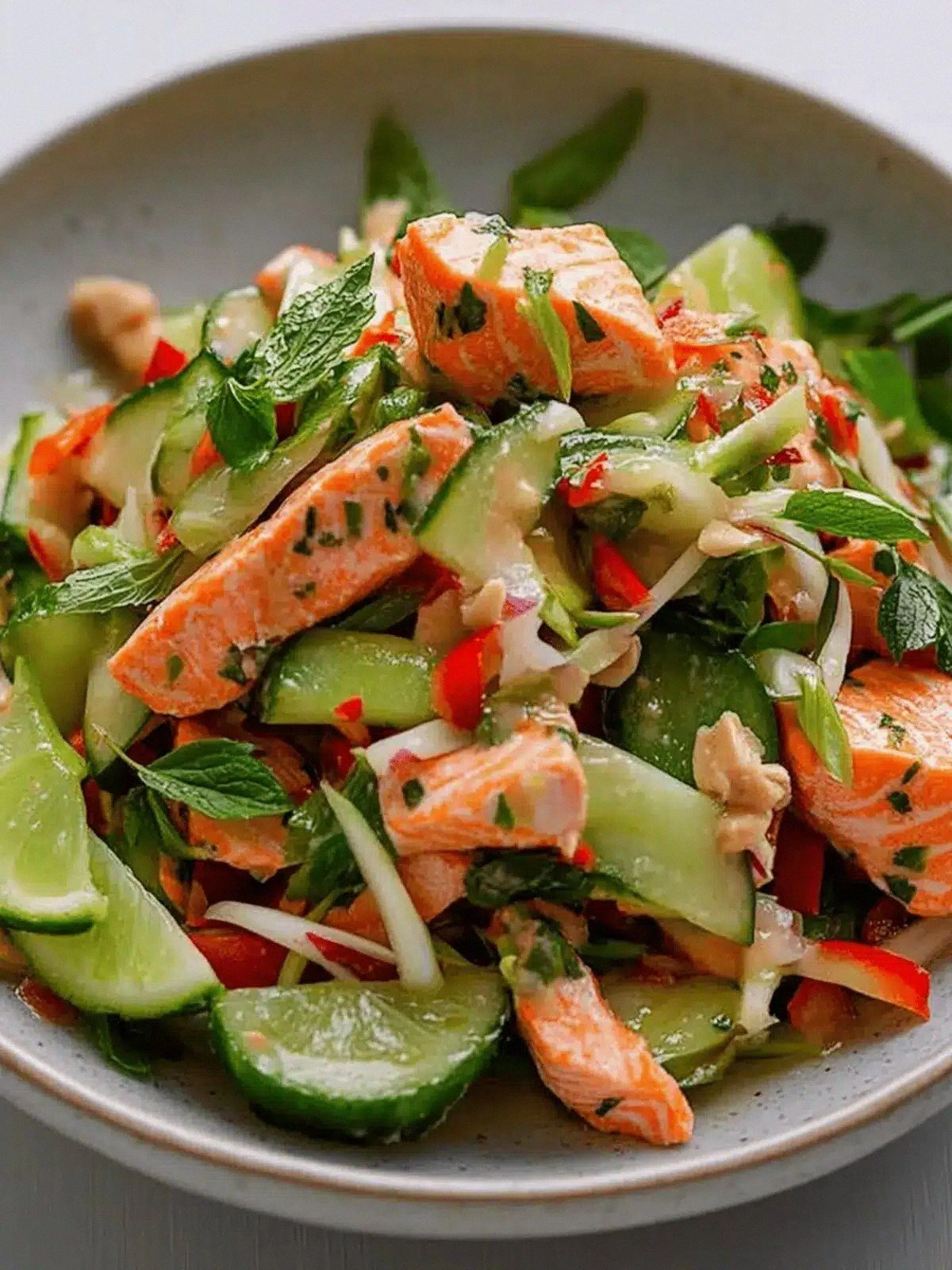
- Visual Appeal: The vibrant greens of the herbs, the bright red of the chili, and the pale pink of the salmon make this dish a feast for the eyes, perfect for Instagram-worthy moments.
- Ingredient Quality: Using fresh, high‑quality salmon fillets and fresh herbs ensures the flavors shine and the dish feels premium.
Alright, let’s break down exactly what goes into this masterpiece…
Inside the Ingredient List
The Flavor Base
Fish sauce and lime juice form the backbone of the dressing. Fish sauce brings umami depth, while lime juice injects bright acidity that cuts through the richness of the salmon. If you’re on a low‑sodium diet, reduce the fish sauce by half and add a splash of water to maintain the liquid balance. A pinch of sea salt can be added later to taste, ensuring you don’t over‑salt the dish.
The Texture Crew
Cucumber and spring onions add crunch and freshness. Slice the cucumber into thin ribbons with a mandoline for uniformity; this ensures each bite delivers a crisp bite. Spring onions should be finely chopped; their mild onion flavor balances the stronger herbs without overpowering them. If you don’t have spring onions, scallions or even thinly sliced red onions work as substitutes.
The Unexpected Star
Chili flakes and a whole long red chili bring heat that is both immediate and lingering. The flakes give a subtle pop of spice, while the sliced chili adds a visual flair and a steady warmth. If you’re not a fan of heat, reduce the chili flakes to one teaspoon and leave the chili slice out, or replace it with a milder pepper.
The Final Flourish
Fresh coriander and mint are the finishing touch, offering a burst of herbal aroma that lifts the dish. Use a sharp knife to finely chop the leaves, releasing their essential oils. A pinch of shaved palm sugar balances the acidity and heat, creating a silky sweet undertone. If palm sugar isn’t available, a small amount of brown sugar or maple syrup can serve as a suitable replacement, though the flavor nuance will differ slightly.
Everything’s prepped? Good. Let’s get into the real action…
The Method — Step by Step
-
Heat a non‑stick skillet over medium‑high heat and add the tablespoon of vegetable oil. Once the oil shimmers, place the salmon fillets skin‑side down. Let them cook undisturbed for about 3–4 minutes until the skin crisps up and releases easily from the pan. Flip the fillets and sear the other side for 2–3 minutes, or until the fish is opaque but still juicy. The goal is a beautiful sear that locks in moisture without drying it out. If you notice the pan getting too hot, lower the heat slightly to avoid burning.
-
While the salmon is resting, dice the medium onion into small cubes. The onion adds a sweet crunch that contrasts with the tender fish. Sauté the onion in a small amount of oil until translucent, about 2 minutes. This step brings out the natural sweetness of the onion, balancing the sharpness of the lime. If you prefer a raw bite, you can skip sautéing and add the onion directly to the salad.
-
Prepare the dressing by whisking together 2 tablespoons of fish sauce, 2 tablespoons of lime juice, 1 teaspoon of shaved palm sugar, 1 teaspoon of chili flakes, and 1 teaspoon of sea salt. Taste the mixture; it should be a balanced blend of salty, sour, sweet, and spicy. If the dressing feels too strong, dilute it with a teaspoon of water. This dressing coats the salmon like velvet, ensuring every bite is flavorful.
-
Slice the cucumber into thin ribbons using a mandoline or a sharp knife. The thinness keeps the crunch intact and allows the dressing to cling to each slice. Toss the cucumber ribbons with a pinch of salt to draw out moisture, then let them rest for 5 minutes. This brief step keeps the cucumber crisp and prevents it from becoming soggy.
-
Finely chop the coriander, mint leaves, and spring onions. The herbs should be chopped to a size that releases their oils without turning the salad into a mush. Add the herbs to a large bowl and pour the dressing over them. Toss gently to coat everything evenly. The fresh herbs will brighten the dish and provide a fragrant finish.
-
Slice the salmon fillets into bite‑size pieces once they’re fully cooked. Gently fold the salmon into the bowl with the herb mixture. The heat from the salmon will slightly wilt the herbs, creating a warm, aromatic blend. Be careful not to overmix; you want each piece of salmon to remain distinct.
-
Add the sautéed onion, cucumber ribbons, and a sliced long red chili to the bowl. The onion adds sweetness, the cucumber brings crispness, and the chili offers a lingering heat that stays on the palate. Toss everything together until the ingredients are evenly distributed.
-
Plate the salad on a chilled dish, arranging the salmon on top of the herb mixture. The visual contrast of the vibrant greens, bright red chili, and pink salmon makes the dish as pleasing to the eye as it is to the taste buds. Garnish with a few extra coriander leaves if desired.
-
Serve immediately for the freshest experience. If you’re prepping ahead, cover the bowl with plastic wrap and refrigerate for up to 2 hours. Re‑toss the salad before serving to redistribute the dressing.
That’s it — you did it. But hold on, I’ve got a few more tricks that’ll take this to another level…
Insider Tricks for Flawless Results
The Temperature Rule Nobody Follows
Many cooks start the salmon at low heat and end up with a soggy fillet. The trick is to pre‑heat the pan until a few droplets of water sizzle when they touch the surface. This ensures a quick sear that locks in moisture. I’ve seen the difference between a pan that’s too hot (burnt crust) and one that’s just right (crisp, juicy). Keep the heat steady and avoid overcrowding the skillet.
Why Your Nose Knows Best
Before you add the lime juice, close your eyes and sniff the fish sauce. A good fish sauce will have a deep, briny aroma, not a sour or off smell. If it’s off, replace it. A fresh, robust fish sauce is the secret behind that umami punch that makes the salad sing.
The 5-Minute Rest That Changes Everything
After searing the salmon, let it rest for 5 minutes on a wire rack. This step allows the juices to redistribute, ensuring the fillets remain moist. I’ve learned that cutting into the salmon immediately often pulls the juices out, leaving the fillet dry. The short rest makes a noticeable difference in texture.
Herb Freshness Hacks
To keep herbs crisp, store them in an airtight container with a damp paper towel in the refrigerator for up to 3 days. This keeps them hydrated and prevents wilting. If you’re prepping ahead, place the herbs in a sealed bag with a little water and seal it tightly.
Balancing Sweetness
When adding palm sugar, start with a small amount and taste the dressing. Palm sugar has a distinct caramel flavor; too much can overwhelm the lime’s brightness. If you prefer a more subtle sweetness, use brown sugar or a small drizzle of honey instead.
Creative Twists and Variations
This recipe is a playground. Here are some of my favorite ways to switch things up:
Asian Noodle Remix
Swap the cucumber for chilled soba noodles and toss the salmon with the noodles. Add a splash of soy sauce and a drizzle of sesame oil for an extra layer of umami. This version turns the salad into a hearty, noodle‑filled meal perfect for lunch.
Spicy Pineapple Kick
Introduce diced fresh pineapple to the mix for a tropical sweetness that pairs beautifully with the chili. The pineapple’s acidity cuts through the richness of the salmon, creating a bright, beach‑inspired flavor profile.
Vegan Version
Replace the salmon with marinated tofu cubes. Sear the tofu until golden, then fold it into the salad. Add a dash of tamari instead of fish sauce for a vegan-friendly twist.
Smoked Salmon Edition
Use smoked salmon instead of fresh fillets for a smoky depth. The dressing’s bright lime will cut through the smoke, balancing the flavor. This version works well for brunch or a sophisticated appetizer.
Quinoa Power Bowl
Cook quinoa and fold it into the salad for added protein and fiber. The quinoa’s nutty flavor complements the herbs, while the dressing lifts the entire bowl. This variation turns the salad into a complete, balanced meal.
Storing and Bringing It Back to Life
Fridge Storage
Store the salad in an airtight container for up to 2 days. Keep the dressing separate until just before serving to maintain the crispness of the cucumber and herbs. If you must refrigerate the salad, cover it with parchment paper to prevent moisture buildup.
Freezer Friendly
Salmon can be frozen for up to 3 months. After cooking, cool the fillets completely, then wrap them tightly in plastic wrap and place them in a freezer bag. Thaw overnight in the refrigerator before reheating. Re‑heat gently in a skillet or microwave on low power, then fold into the salad.
Best Reheating Method
When reheating frozen salmon, add a splash of water or broth to the pan to create steam, which keeps the fish from drying out. Once heated, toss with fresh herbs and a quick splash of lime juice to revive the flavors. A tiny splash of water before reheating steams the fish back to perfection.