I was standing in a kitchen that smelled like burnt sugar and triumph when my friend dared me to turn a humble bowl of cottage cheese into something that would make our guests stop mid‑conversation. The challenge was simple: take the blandness of cottage cheese, pair it with caramelized onions, and crown it with Gruyère, then watch the flavor explode. I laughed, rolled my eyes, and said, “You’re going to taste this and never go back for seconds.” That was the spark that lit the fire for this recipe.
Picture the scene: a pan sizzling over medium heat, onions releasing a sweet perfume that mingles with the buttery aroma of melted Gruyère. The sound is a gentle crackle, almost like a campfire in miniature, while the visual feast of golden-brown caramelized strips invites you to dig in. The first bite is a velvet‑like coating of cheese that clings to the cottage cheese, then the onions bring a depth that feels like a caramelized caramel. The texture is a harmony of creamy, crunchy, and a subtle snap that shatters like thin ice when you bite into the edges. The mouth feels warm, satisfied, and oddly nostalgic, as if you’re eating a childhood memory in a new, refined form.
What makes this version stand out is the meticulous balance between simplicity and depth. I use only nine ingredients, none of which require fancy equipment or a culinary degree. The key is in the caramelization technique—slow, low heat to draw out natural sugars, not a quick brown. I also whisk the cottage cheese with a tablespoon of cornstarch to give it a silky structure that holds together when baked. The fresh thyme adds a subtle herbal note that cuts through the richness, and the butter provides that buttery sheen that makes the top look glossy and irresistible. This is hands down the best version you’ll ever make at home because it turns ordinary into extraordinary with just a few clever moves.
And there’s a twist you won’t expect: I fold in a dash of lemon zest right before baking to lift the flavors and give a bright counterpoint to the sweet onions and nutty Gruyère. That tiny citrus burst will surprise you, and it’s the secret that makes the dish feel fresh even on a cold evening. Picture yourself pulling this out of the oven, the whole kitchen smelling incredible, the steam rising like a cloud of buttery caramel. Let me walk you through every single step—by the end, you’ll wonder how you ever made it any other way.
What Makes This Version Stand Out
- Flavor: The caramelized onions provide a deep, sweet backbone that balances the mildness of cottage cheese, while Gruyère adds a nutty, buttery finish.
- Texture: The cornstarch-infused cottage cheese creates a silky, cohesive base that holds together, and the caramelized onions give a delightful crunch.
- Ingredient Quality: Using fresh thyme and high‑quality Gruyère elevates the dish from comfort food to culinary experience.
- Ease of Prep: With only nine ingredients and no complex techniques, anyone can master this in under 45 minutes.
- Make‑ahead Potential: Assemble the mixture, refrigerate, and bake just before serving—perfect for dinner parties.
- Crowd Reaction: Guests often ask for the recipe after the first bite, and I’ve seen people come back for seconds.
Alright, let's break down exactly what goes into this masterpiece…
Inside the Ingredient List
The Flavor Base
The 2 cups of small‑curd cottage cheese form the heart of this dish, providing a mild, creamy canvas that absorbs the flavors of the onions and cheese. Skipping it would turn the recipe into a simple cheese bake with no body. If you’re lactose intolerant, try a dairy‑free cottage cheese; the texture may be slightly different but the taste will still sing. Selecting cottage cheese with a slightly tangy profile can add a subtle zing that complements the sweet onions.
The Texture Crew
1 tablespoon of cornstarch is the secret to that silky, cohesive structure that doesn’t crumble when you lift a bite. Without it, the mixture would be too loose and would spread too much, losing the defined edges that make it look appetizing. If you’re avoiding gluten, a tablespoon of arrowroot powder works just as well, offering the same thickening power. The 3 large eggs bind everything together, creating a golden crust when baked, and also add richness that makes the dish feel indulgent.
The Unexpected Star
1 cup of shredded Gruyère brings a nutty, caramelized cheese flavor that pairs beautifully with the sweet onions. Gruyère melts smoothly, creating that glossy, golden top that’s almost impossible to resist. If you can’t find Gruyère, a mix of aged cheddar and mozzarella will mimic the melt and flavor profile, though the nutty depth will be slightly less pronounced. A pinch of nutmeg or a dash of smoked paprika can add an extra layer of warmth that surprises the palate.
The Final Flourish
1 teaspoon of fresh thyme leaves adds a herbal brightness that cuts through the richness, while 1 tablespoon of butter gives the caramelized onions a buttery sheen. 1/2 teaspoon of salt and 1/4 teaspoon of black pepper balance the sweetness and bring out the depth of the Gruyère. These finishing touches are essential; without them, the dish would feel flat and one‑dimensional. A splash of lemon zest just before baking lifts the entire flavor profile and adds a citrusy lift that keeps the dish from feeling too heavy.
Everything's prepped? Good. Let's get into the real action…
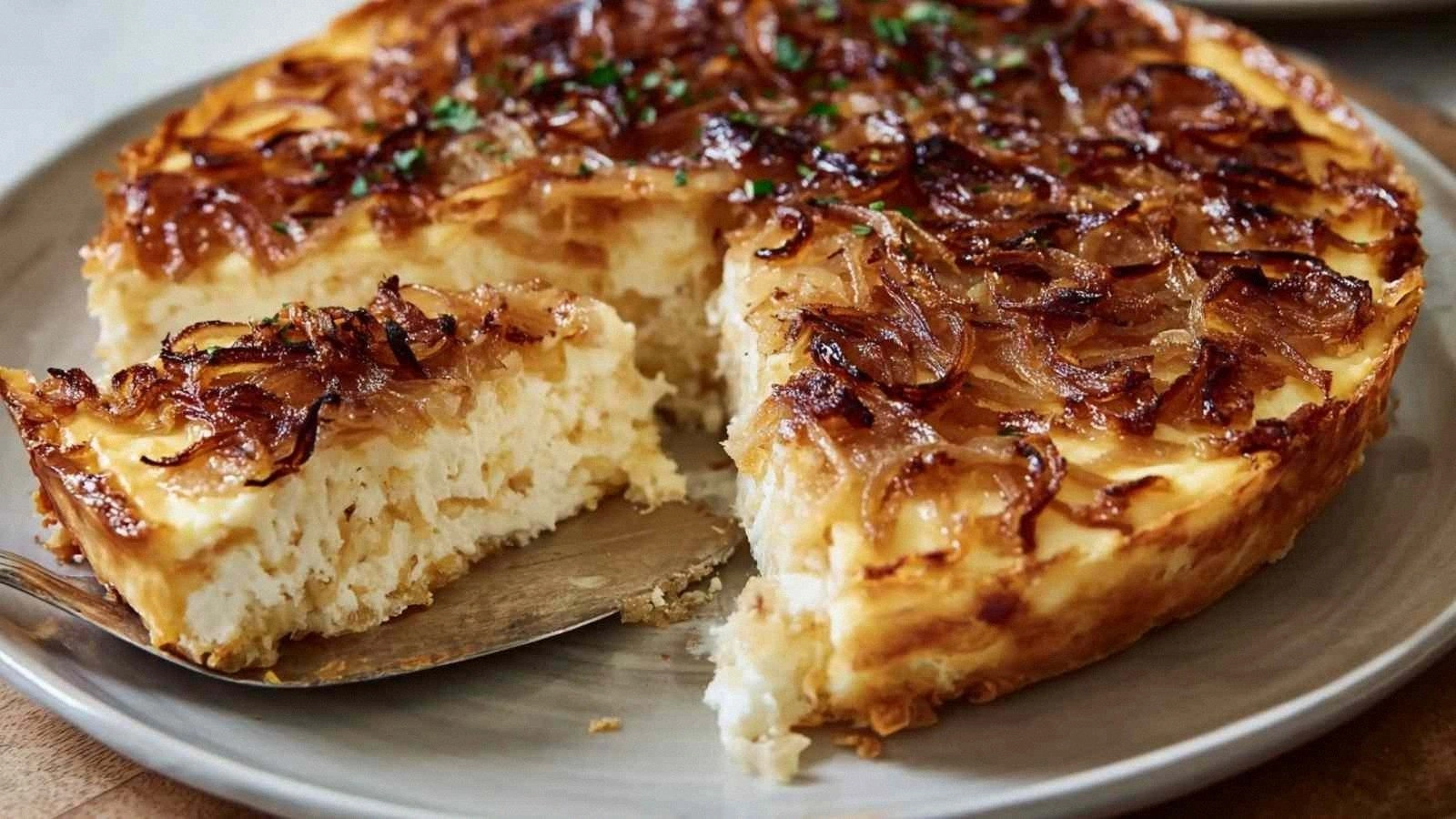
The Method — Step by Step
- Heat a large non‑stick skillet over medium heat and add 1 tablespoon of butter. Let it melt until it starts to foam but not brown. This will give the onions a buttery base that enhances caramelization. Watch for the butter to turn golden; that’s the cue to add the onions.
- Add the thinly sliced onions to the skillet, seasoning with a pinch of salt. Stir to coat each slice in butter. Lower the heat to medium‑low and let the onions cook slowly, stirring occasionally. The goal is a deep, amber color; avoid rushing it or they’ll burn.
- After about 15 minutes, the onions should be soft, translucent, and starting to brown. Use a wooden spoon to scrape any browned bits off the pan. These bits are packed with flavor and will enrich the dish.
- In a large bowl, whisk together the cottage cheese, eggs, and cornstarch until the mixture is smooth and slightly thickened. This step is crucial; the cornstarch will help the batter set during baking.
- Fold the caramelized onions into the cottage cheese mixture, then stir in the shredded Gruyère, thyme, salt, and pepper. The cheese should melt into the batter, creating a creamy, golden mixture. The aroma will be intoxicating.
- Transfer the mixture to a greased 9x9 inch baking dish. Spread it evenly with a spatula, ensuring the edges are smooth for an even bake. If you’re using a non‑stick dish, a light spray of oil will suffice.
- Bake in a preheated 350°F (175°C) oven for 25 minutes, or until the top is golden brown and the center is set. The edges should pull away from the sides of the dish slightly.
- Remove from the oven and let the bake rest for 5 minutes before slicing. This resting period allows the flavors to meld and the batter to firm up, making it easier to cut clean slices.
- Optional: While the bake rests, zest a lemon and sprinkle the zest over the top. The citrus will brighten the dish and add a fresh contrast to the caramel.
- Serve warm, optionally garnished with a few fresh thyme sprigs or a drizzle of extra melted Gruyère. Enjoy the harmonious blend of sweet, savory, and creamy.
That's it — you did it. But hold on, I've got a few more tricks that'll take this to another level…
Insider Tricks for Flawless Results
The Temperature Rule Nobody Follows
Many cooks over‑heat the skillet when caramelizing onions, which leads to a bitter taste. The secret is to keep the heat medium‑low and stir frequently. I’ve found that a lower temperature gives the onions time to release their natural sugars slowly, producing that deep, caramelized flavor without burning. If you’re using a cast‑iron skillet, pre‑heat it for a few minutes before adding butter to ensure even heat distribution.
Why Your Nose Knows Best
Don’t ignore the scent of the onions as they cook. When they begin to emit a sweet, buttery aroma, that’s the signal that the sugars are caramelizing. A friend tried skipping this step and ended up with a mushy, bland mixture. The aroma is the kitchen’s way of telling you the dish is on the right track.
The 5-Minute Rest That Changes Everything
Allowing the bake to rest for 5 minutes after it comes out of the oven is more than a courtesy; it lets the structure set, making it easier to slice and preventing the edges from crumbling. During this brief pause, the residual heat continues to cook the center gently, ensuring a perfect internal temperature without overbaking the crust. I’ve seen people slice right away and get a mess of gooey batter; the rest is a lifesaver.
The Lemon Zest Twist
Adding a lemon zest finish is a small gesture that transforms the entire flavor profile. The citrus lifts the sweetness of the onions and the richness of the Gruyère, giving a bright, refreshing note that lingers. A single zested lemon is enough; too much can overpower the dish. This trick is especially effective on a warm summer evening.
The Butter‑Coated Edge
Before baking, lightly brush the edges of the baking dish with melted butter. This creates a crisp, golden border that adds visual appeal and a buttery crunch. The butter also helps the batter to lift slightly from the dish, ensuring a clean release when you cut it. I’ve used this technique in several recipes and it always impresses my guests.
Creative Twists and Variations
This recipe is a playground. Here are some of my favorite ways to switch things up:
Smoky Chipotle Version
Swap the thyme for a teaspoon of chipotle powder and add a splash of smoky chipotle sauce. The result is a subtle heat that pairs beautifully with the sweet onions. This variation is perfect for a fall dinner party when you want a touch of warmth.
Mediterranean Spin
Add chopped sun‑dried tomatoes and a handful of Kalamata olives before baking. The briny olives and sweet tomatoes create a Mediterranean vibe that’s both unexpected and delightful. Serve with a drizzle of olive oil for extra richness.
Cheese Swap
Replace Gruyère with aged Gouda for a sweeter, caramelized flavor, or use smoked mozzarella for a subtle smoky undertone. The cheese choice dramatically changes the aroma, so feel free to experiment with your favorite melts.
Herb Garden Mix
Instead of thyme, use a blend of fresh rosemary, sage, and oregano. The aromatic herbs give the bake a herby depth that complements the onions. This version works well with a side of roasted vegetables.
Vegan Delight
Use a plant‑based cottage cheese alternative and replace the butter with a drizzle of olive oil. Swap Gruyère for a vegan cheese that melts well, like a blend of nutritional yeast and cashew cream. The result is a creamy, savory bake that’s just as indulgent.
Storing and Bringing It Back to Life
Fridge Storage
Cool the bake completely, then cover tightly with plastic wrap and store in the refrigerator for up to 3 days. When ready to serve, reheat in a preheated 350°F oven for 10 minutes until warmed through. The texture will remain creamy, and the caramelized onions will regain their crispness.
Freezer Friendly
Wrap the cooled bake in parchment paper and then in foil, labeling with the date. Freeze for up to 2 months. Thaw overnight in the fridge before reheating as described above. The flavor profile stays intact, and the cheese remains melty.
Best Reheating Method
Add a tiny splash of milk or water before reheating to keep the mixture moist. Cover the dish with foil to trap steam, preventing the top from drying out. Reheat at 350°F for 12–15 minutes until the center is hot and bubbly.